
Introduction: Why Your Pants Matter More Than You Think
Here is a fact that might surprise you. According to a CareerBuilder survey, 41% of employers say they are less likely to promote someone who dresses poorly at work. Your slacks are not just fabric. They are a signal. They tell your boss, your clients, and your coworkers how seriously you take your job.
Business casual is one of the most confusing dress codes in the workplace. It sits right between formal and relaxed, and getting it wrong is easier than most people think. Too casual and you look sloppy. Too formal and you look out of place. The right slacks hit that sweet spot every single time.
This guide will help you find the best slacks for business casual settings. Whether you work in an office, go to meetings, or do video calls from home, the right pants make a big difference. You will learn what fabrics to choose, what fits work best, and how to put together outfits that look polished without looking stiff.
What Are Slacks, and How Are They Different From Regular Pants?
A lot of people use the word “slacks” and “pants” like they mean the same thing. They do not. Slacks are a specific type of dress pant. They are usually made from smooth, slightly dressy fabric. They have a clean, polished look that jeans and casual chinos do not have.
Slacks typically have a flat or pleated front, a proper waistband with belt loops, and a slightly formal silhouette. They are not as stiff as tuxedo trousers, but they are definitely more polished than khakis or cargo pants. This middle ground is exactly what makes slacks the perfect choice for business casual dress codes.
In most workplaces, business casual means you can skip the full suit but still need to look professional. Slacks fill that role perfectly. You can pair them with a button-down shirt, a blazer, or even a nice sweater and still look completely appropriate. That flexibility is one of their biggest strengths.
Why Slacks Are the Best Choice for Business Casual
Not every type of pants fits business casual. Jeans are usually too casual unless your office is very relaxed. Suit trousers can feel too formal if you are not wearing a jacket. Slacks land right in the middle, and that is a big reason why so many professionals rely on them.
Slacks work for a wide variety of body types because they come in so many cuts and styles. You can find slim fit, straight leg, wide leg, and relaxed options depending on what feels comfortable for you. They also come in a huge range of colors and fabrics, which means you can wear them in summer or winter without feeling uncomfortable.
Another big benefit is versatility. A good pair of business casual slacks can take you from a Monday morning meeting to a Friday afternoon lunch with a client. You do not need to change your whole outfit. Just swap your shoes or add a blazer and you have an entirely different look. That kind of range saves you time and money.
The Best Fabrics for Business Casual Slacks
Fabric is one of the most important factors when buying slacks for business casual. The wrong fabric can make expensive pants look cheap or make you sweat through a long workday. Choosing the right material from the start saves you a lot of frustration.
Wool and Wool Blends
Wool is widely considered the best fabric for dress slacks. It holds its shape well, resists wrinkles, and looks naturally polished. A wool blend that includes a small percentage of synthetic fiber like polyester or nylon tends to be more durable and easier to care for than 100% wool. Wool also regulates body temperature well, which means you can wear it in different seasons without too much discomfort.
Cotton
Cotton slacks are a popular option for warmer climates or summer office wear. They breathe well and feel comfortable against the skin. However, cotton wrinkles easily, which can be a problem if you are sitting for long periods. Look for a cotton blend with a small amount of elastane or spandex. That small addition gives the fabric some stretch and helps it bounce back after a day of wear.
Polyester Blends
Polyester blended slacks are usually the most affordable option. They resist wrinkles well and are easy to wash and maintain. However, they do not breathe as well as natural fabrics, and they can look slightly shiny under certain lighting. If budget is a concern, look for a high-quality polyester blend rather than a fully synthetic pair. The better the blend, the more natural it will look.
Linen
Linen is light and breathable, which makes it great for summer. The downside is that linen wrinkles very easily. If you are in and out of meetings all day, linen slacks can start to look worn by noon. A linen blend with cotton or a synthetic fiber can help reduce wrinkling while keeping the lightweight feel. Linen slacks also have a more relaxed look, so they work best in creative or laid-back office environments.
Fits and Cuts: Finding the Right Silhouette
The fit of your slacks matters just as much as the fabric. Business casual is not about wearing the loosest or the tightest option. It is about wearing something that fits your body well and looks intentional.
Slim Fit
Slim fit slacks taper through the leg and sit closer to the body without being tight. They look modern and clean, which is why they are so popular right now. Slim fit works especially well for people with a lean build. If you have larger thighs or hips, a slim fit might feel restrictive, so always try before you buy.
Straight Leg
Straight leg slacks have a consistent width from the thigh to the ankle. This cut is classic and works for almost every body type. It is also the safest choice if you are building a work wardrobe from scratch. Straight leg pants look polished and professional without being too fashion-forward.
Relaxed Fit
Relaxed fit slacks have more room through the seat and thigh. They are not baggy, but they do give you more freedom of movement. This is a great option for people who sit for long hours or who prefer a more comfortable fit. Just make sure the waist fits properly. Too much fabric bunching at the waist can look sloppy even on expensive slacks.
Wide Leg
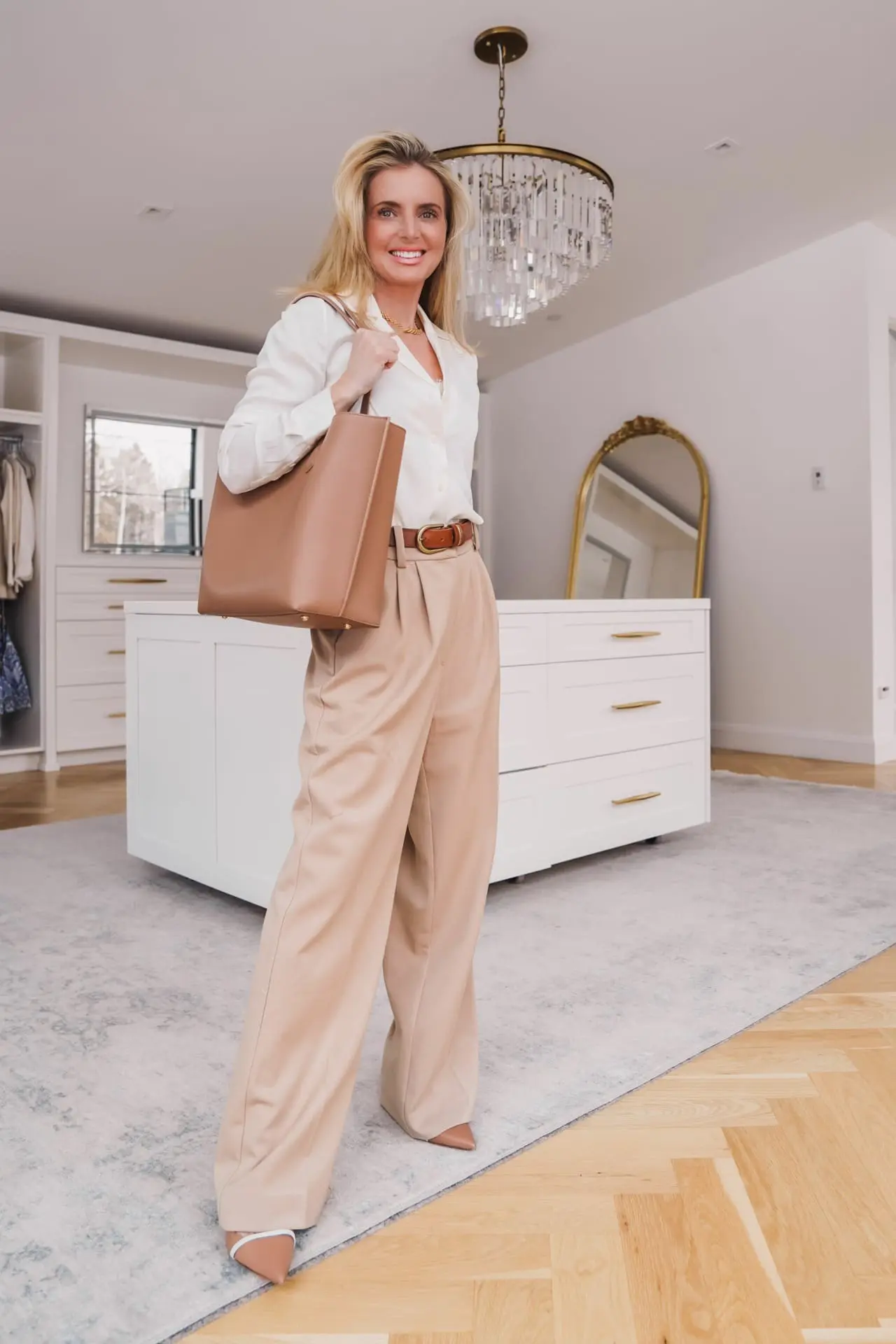
Wide leg trousers have made a strong comeback in recent years. They look polished and confident, especially when paired with a fitted blazer or structured top. This cut works very well for women and is gaining popularity in menswear too. Wide leg slacks are a bold but completely professional choice for business casual settings.
Ankle Length vs. Full Length
Ankle length slacks end right above the ankle or at the ankle bone. Full length slacks break slightly over the shoe. Both are acceptable for business casual. Ankle length tends to look more modern and works well in warmer months. Full length is more traditional and creates a cleaner line when worn with dress shoes or loafers.
Best Colors for Business Casual Slacks
Color plays a big role in whether your slacks look professional or casual. Some colors read as office-appropriate right away. Others might look too casual or too bold for a standard workplace.
The most versatile colors for business casual slacks are navy, charcoal, gray, and black. These colors pair easily with most shirts, blouses, and blazers. They also look polished in any professional setting, from corporate offices to creative agencies.
Navy slacks are arguably the most versatile of all. They work with white, light blue, pink, and even burgundy tops. Charcoal is almost as flexible and tends to be a good alternative if black feels too formal for your office. Medium gray is another strong choice because it works with both cool and warm tones.
Tan and camel slacks are great for fall and winter. They give a warmer, slightly more relaxed look that still reads as professional. Olive and earthy tones are growing in popularity and can work well in more creative environments. Bright colors like red, yellow, or electric blue are generally better saved for casual weekends unless your workplace has a very open dress code.
How to Style Business Casual Slacks for Men
Men have a lot of options when it comes to styling slacks for business casual. The key is to aim for a put-together look without going full corporate. Here are some combinations that work well.
A pair of slim fit navy slacks with a light blue Oxford shirt and loafers is one of the cleanest and most dependable business casual looks you can wear. Add a sport coat if you have an important meeting, or leave it off for a more relaxed office day. This outfit works from Monday to Friday without getting tired.
Charcoal straight leg slacks paired with a white linen shirt and white sneakers give a more modern, creative office vibe. This combination works especially well in tech, media, or design companies. The sneakers keep it from feeling too formal, but the slacks and the tucked-in shirt keep it looking intentional.
For cooler months, try dark gray slacks with a fitted crew neck sweater in a neutral tone like beige or burgundy. Finish with clean leather shoes or suede loafers. This look is warm, stylish, and completely office-appropriate. A watch and a leather belt in the same tone as your shoes will tie the whole outfit together nicely.
How to Style Business Casual Slacks for Women
Women have even more flexibility when it comes to business casual slacks. The range of cuts, fabrics, and lengths available in the women’s market is huge, which means you can find something that fits your personal style while still meeting professional expectations.
Wide leg trousers in a neutral tone like camel or cream look very polished when paired with a fitted blazer or a structured silk blouse. Add a block heel or a pointed-toe flat to complete the look. This combination works especially well in office environments where you want to project authority and confidence.
Slim fit black slacks are one of the most useful items in any woman’s work wardrobe. They pair with almost everything, from a casual white t-shirt tucked in with a belt to a bold patterned blouse or a structured cardigan. Black slacks have a naturally polished look that does not require a lot of extra effort to dress up.
Ankle-length pants in navy or dark gray work beautifully with loafers, mules, or low heels. They are comfortable enough for long days and look professional enough for client-facing roles. Pair them with a button-down shirt or a soft knit top for a balanced business casual outfit that feels effortless but looks considered.
Key Features to Look for When Buying Business Casual Slacks
When you are shopping for slacks, knowing what details to look for helps you get better value for your money. Not all slacks are made the same, and small features make a big difference in how they look and how long they last.
| Feature | Why It Matters |
|---|---|
| Fabric composition | Affects comfort, breathability, and wrinkle resistance |
| Waistband construction | A well-made waistband keeps the slacks looking neat throughout the day |
| Lining | Lined slacks hang better and are more comfortable against the skin |
| Stitching quality | Strong stitching means the slacks will hold up after many wears and washes |
| Care instructions | Machine-washable slacks are more practical for everyday wear |
Look for slacks with a clean, finished hem. The hem should lie flat and not look bunched or uneven. Belt loops should be evenly spaced and firmly attached. If the slacks have pockets, they should lay flat against the leg and not bulge out. A front crease, which is a pressed line running down the front of each leg, adds a sharp, polished look that works very well for business settings.
Common Mistakes to Avoid With Business Casual Slacks
Even good slacks can look bad if you wear them the wrong way. Here are some of the most common mistakes people make, along with simple ways to fix them.
Wearing slacks that are too long: When slacks are too long, they bunch and drag on the floor. This makes even expensive pants look sloppy. Get your slacks hemmed to the right length for your height and shoe style. This small investment pays off immediately.
Choosing the wrong fit: Slacks that are too tight across the seat or thighs will look uncomfortable and unprofessional. Slacks that are too loose at the waist will sag and bunch. Always try slacks on before buying. If you shop online, check the return policy so you can exchange for a better size.
Ignoring wrinkles: Wrinkled slacks undermine your whole look. Hang your slacks properly after each wear. If they wrinkle easily, use a steamer rather than an iron. A steamer is gentler on the fabric and faster to use. You can also look for slacks labeled as wrinkle-resistant, which save a lot of time in the morning.
Pairing with the wrong shoes: Slacks need footwear that matches their level of formality. Dress shoes, loafers, block heels, and pointed flats all work well. Flip flops, athletic sneakers, and hiking boots generally do not. The right shoe choice can lift an outfit significantly.
Skipping the belt: If your slacks have belt loops and you are wearing a tucked-in shirt, wear a belt. A belt adds structure and intentionality to your look. Match the color of your belt to your shoes for a clean, coordinated result.
How to Build a Work Wardrobe Around Business Casual Slacks
Building a functional work wardrobe does not need to be complicated or expensive. The secret is to invest in a few high-quality pairs of slacks in neutral colors and then rotate them throughout the week with different tops and shoes.
Start with three core pairs: one in navy, one in charcoal or gray, and one in black. These three colors cover almost every business casual situation you will encounter. From there, you can add seasonal options like tan or olive depending on your personal taste and your workplace culture.
For tops, stock up on button-down shirts, blouses, fitted sweaters, and simple t-shirts in neutral tones. White, light blue, ivory, and soft gray are all great starting points because they pair with every slack color in your rotation. Once you have the basics covered, you can add prints, patterns, and bolder colors as accents.
Shoes are a bigger investment, but they are worth it. For men, a pair of classic leather oxfords, a pair of loafers, and a casual suede option covers most situations. For women, block heels, pointed flats, and loafers are all versatile enough to work with multiple slack styles and colors. Quality footwear ties the whole business casual look together in a way that nothing else quite manages.
Taking Care of Your Business Casual Slacks
Good slacks last a long time when you take care of them properly. Neglecting proper care shortens their lifespan and makes them look worn much faster than they should.
Always read the care label before washing. Many dress slacks are dry-clean only, especially if they are made from wool or have a delicate lining. Washing them at home can cause shrinking, color fading, or damage to the fabric structure. If your slacks are machine-washable, always use cold water and a gentle cycle. Turn them inside out before washing to protect the surface of the fabric.
Hang your slacks on a proper pants hanger after every wear. Folding them over a chair or leaving them on the floor causes creasing and misshaping. A good pants hanger that clips at the hem lets the slacks hang straight and keeps their shape between wears. Allow them to air out for a few hours before putting them back in your closet.
Store your slacks in a cool, dry space away from direct sunlight. Sunlight can fade darker colors over time. If you live in a humid climate, consider adding cedar blocks or moisture absorbers to your closet. These protect fabric from moisture damage and keep your slacks smelling fresh. Rotate your pairs regularly so no single pair gets worn too frequently, which extends the life of your whole collection.
Budget vs. Quality: How Much Should You Spend?
Price is always a factor when building a work wardrobe. The good news is that you do not need to spend a fortune to get business casual slacks that look great and hold up well over time.
At the lower end of the budget, you can find decent slacks for around $30 to $60. These are often polyester blends that resist wrinkles well and come in a good range of colors. They are a fine starting point, especially if you are just beginning to build your work wardrobe or if your budget is tight. The tradeoff is that they may not look as sharp or last as long as pricier options.
Mid-range slacks in the $60 to $150 price range offer a noticeable step up in quality. This is where you start to see better fabrics like cotton or wool blends, better construction, and more refined silhouettes. Brands in this range often offer more sizes and cuts, which means a better fit overall. This is the best value tier for most people, and it is where many professionals shop.
High-end slacks above $150 are often made from premium fabrics with better tailoring and more precise construction. They tend to last longer, hold their shape better, and look noticeably more polished. If you work in a high-profile role or a corporate environment where appearance matters a great deal, investing in a couple of premium pairs can be worth it. Just make sure you take proper care of them so you get the full value of the investment.
Business Casual Slacks for Different Work Environments
Not all offices have the same culture, and your slacks should reflect the environment you work in. Understanding the unspoken dress code of your workplace helps you make better choices.
In corporate or finance environments, stick to classic cuts and neutral colors. Slim or straight leg slacks in charcoal, navy, or black paired with a crisp shirt and leather shoes are the safest bets. Avoid anything too fashion-forward or casual, even if it technically falls within the business casual category.
In creative industries like marketing, design, or media, you have more room to experiment. Wide leg trousers, bolder colors, and unexpected fabric combinations are more accepted. You can wear olive slacks with a graphic tee tucked in and white sneakers and still look completely appropriate. The key is to make sure everything fits well and looks intentional.
In tech or startup environments, business casual tends to lean more casual than in traditional offices. Well-fitted chinos or smart slacks in relaxed colors work well. Pairing them with a simple pullover or a polo shirt is usually enough to look professional without overdressing. Just avoid wrinkled, oversized, or damaged clothing regardless of how relaxed the culture is.
A Quick Word on Chinos vs. Slacks
Many people wonder whether chinos and slacks are the same thing. They are not, but the line between them is often blurry. Chinos are made from a slightly more casual cotton twill fabric, while slacks have a dressier look and feel. Both can work for business casual, but slacks tend to look more polished and are safer choices in more formal office environments.
If your workplace leans casual, chinos are a great option and can be styled very similarly to slacks. If your workplace is more traditional, slacks are the better choice. Knowing the difference helps you make the right call depending on where you work and who you are going to meet.
Conclusion: Start With the Right Slacks and Build From There
Slacks for business casual are one of the smartest investments you can make in your work wardrobe. They are versatile, polished, and appropriate in a wide range of professional settings. The right pair makes you look confident, capable, and put-together without requiring a lot of effort.
Start with a small collection of slacks in neutral colors like navy, gray, and black. Choose fabrics that suit your climate and your lifestyle. Focus on getting the right fit, because a well-fitted pair of mid-range slacks will always beat a poorly-fitted pair of expensive ones. Take care of your slacks properly, and they will serve you well for years.
Business casual is not about dressing to blend in. It is about dressing to show up with intention. The right slacks help you do exactly that, every single day. So go find your fit, build your wardrobe with purpose, and show up to work looking like you mean business.