Introduction
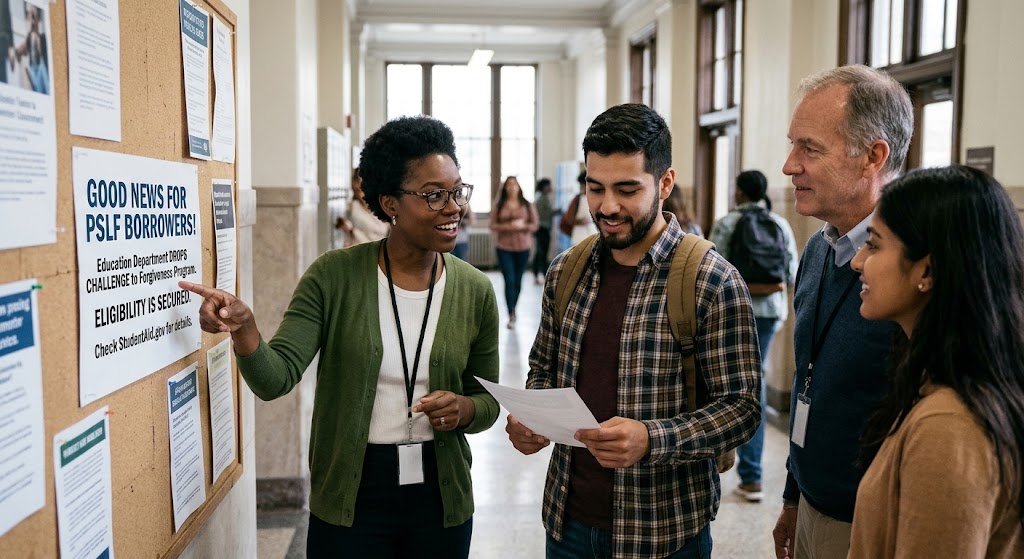
The news that the Education Department drops the PSLF challenge has become an important development for public service workers and federal student loan borrowers across the United States. The decision could help protect access to student debt relief for eligible employees working in government agencies and nonprofit organizations. When people search for education department drops pslf challenge, they want to understand why the government ended its legal fight, what happened in court, and whether existing loan forgiveness rules will remain in place. The phrase education department drops pslf challenge also highlights a major debate over the government’s authority to determine which employers qualify for federal student loan forgiveness. For borrowers following the Education Department drops PSLF challenge story, the most important question is whether this development changes their eligibility or payment requirements. Understanding the Education Department’s PSLF challenge decision can help public service employees stay informed about their options and the next steps they may need to take.
What Is the Public Service Loan Forgiveness Program?
Public Service Loan Forgiveness, commonly known as PSLF, is a federal program designed to help eligible borrowers who work in qualifying public service positions. Established in 2007, the program allows eligible borrowers to have the remaining balance of their qualifying Direct Loans forgiven after completing the required qualifying employment and payment conditions.
Generally, borrowers must work full-time for a qualifying government employer or eligible nonprofit organization and make the equivalent of 120 qualifying monthly payments under the program’s requirements.
The program can be relevant to teachers, nurses, public health professionals, government employees, and workers at eligible nonprofit organizations. However, working in public service does not automatically guarantee loan forgiveness. Borrowers must meet the applicable eligibility requirements and verify their employment and payment history.
Why Did the Education Department Drop the PSLF Challenge?
In October 2026, the federal government withdrew appeals connected to court rulings that blocked new restrictions on the Public Service Loan Forgiveness program. The proposed rules would have allowed the Education Department to disqualify certain employers from PSLF if officials determined that their activities had a “substantial illegal purpose.”
Critics argued that the proposed restrictions gave the government excessive discretion to determine which organizations could participate in the program. Nonprofit organizations, state and local governments, and labor groups challenged the changes in court.
Federal judges ruled against the contested restrictions in separate cases. On October 21, 2026, the government dropped two appeals, leaving those court victories in place. The decision was welcomed by organizations that had argued the proposed restrictions could threaten student loan forgiveness for public service workers.
The government did not provide a detailed public explanation for withdrawing the appeals, according to reporting by the Associated Press and other news outlets.
How Does the Decision Affect Student Loan Borrowers?
The withdrawal of the appeals is significant because it removes those particular legal challenges to the court rulings. For borrowers, the immediate takeaway is that the blocked restrictions covered by those cases will not be reinstated through those appeals.
Here are some important points for borrowers:
- Existing eligibility rules: The decision leaves the existing PSLF framework in place in the cases covered by the withdrawn appeals.
- Qualifying employment: Borrowers should continue checking whether their employer meets the program’s requirements.
- Payment requirements: Eligible borrowers generally still need the equivalent of 120 qualifying monthly payments.
- Account records: Borrowers should review their qualifying payment counts and employment certification records.
- Individual eligibility: The withdrawal of the appeals does not mean every borrower automatically qualifies for forgiveness.
Borrowers should also be aware that separate legal proceedings or other student loan policy changes may affect the broader program. It is important to consult current official guidance rather than assuming that every PSLF rule or repayment requirement has remained unchanged.
Which Workers Could Benefit From the Development?
The development may be particularly relevant to people employed by qualifying public service organizations.
Government Employees
Employees working for eligible federal, state, local, or tribal government employers may qualify for PSLF if they satisfy the program’s other requirements.
Teachers and Education Professionals
Employees of qualifying public schools and eligible educational organizations may be able to pursue PSLF. Their eligibility depends on their employer, loan type, employment status, and qualifying payments.
Healthcare Professionals
Nurses, doctors, and other professionals employed by qualifying government or nonprofit healthcare organizations may also be eligible.
Nonprofit Organization Employees
Workers at qualifying nonprofit organizations are another important group. The proposed restrictions had raised concerns about whether some organizations could lose their qualifying status because of their activities.
These examples are not a guarantee of eligibility. Borrowers should verify their individual circumstances using the official PSLF Help Tool.
What Should PSLF Borrowers Do Next?
Although the withdrawal of the appeals is encouraging for borrowers concerned about the proposed restrictions, it is still important to manage loan records carefully.
First, sign in to your StudentAid.gov account and review your loan information. Confirm that your loans and payment records are correctly displayed.
Second, check your employer’s eligibility. If you work for a government agency or nonprofit organization, use the official PSLF Help Tool to confirm whether your employer qualifies.
Third, make sure your employment certification is up to date. Keep copies of employment records, payment information, and relevant correspondence.
Finally, follow official announcements from Federal Student Aid. Do not stop making required payments or change your repayment strategy solely because of a news headline. If you are close to forgiveness or have questions about a disputed payment count, contact your loan servicer or consult an appropriate student loan adviser.
Could More PSLF Legal Changes Happen?
Student loan policy can change through legislation, regulations, court decisions, and administrative actions. Although withdrawing the two appeals preserves the court victories involved in those cases, it does not necessarily resolve every legal dispute involving PSLF.
Separate litigation and other changes to federal student loan repayment rules may still affect borrowers. The precise impact will depend on the relevant court orders, applicable regulations, and a borrower’s individual circumstances.
For that reason, borrowers should rely on official government announcements and established news organizations when evaluating future developments.
Conclusion
The decision behind the education department’s drop of the PSLF challenge headline marks an important development in the ongoing debate over public service student loan forgiveness. By withdrawing two appeals against court rulings that blocked the proposed restrictions, the federal government left those rulings in place and avoided reinstating the contested rules through those cases.
For eligible public service workers, this provides reassurance that the blocked restrictions will not be revived through the withdrawn appeals. However, borrowers must still satisfy applicable PSLF requirements, maintain accurate records, and monitor official updates.
Anyone pursuing Public Service Loan Forgiveness should review their employer eligibility, qualifying payment count, and account information through StudentAid.gov. Staying informed and relying on official guidance can help borrowers make better decisions about their student loans.
Frequently Asked Questions (FAQs)
What does “Education Department drops PSLF challenge” mean?
It means the federal government withdrew two appeals seeking to overturn court rulings that blocked proposed restrictions on the Public Service Loan Forgiveness program.
What is PSLF?
PSLF is a federal student loan forgiveness program for eligible borrowers who work in qualifying public service jobs and meet the program’s payment and other requirements.
Does the decision mean all student loans will be forgiven?
No. Only borrowers who satisfy the applicable PSLF eligibility requirements can receive forgiveness. The decision does not automatically cancel everyone’s student debt.
How many payments are generally required for PSLF?
Eligible borrowers generally need the equivalent of 120 qualifying monthly payments while meeting the program’s employment and other requirements.
Can PSLF rules change again?
Yes. Future legislation, regulations, or court decisions may affect the program. Borrowers should follow official Federal Student Aid announcements for the latest information.